Unit-side diagnosis
Power unit, motor, relay, board, breaker, and exhaust behavior
Use this lane when the system hums, trips, smells hot, clicks without starting, blows dusty exhaust, or sounds louder than normal.


Vacuum & Central Vac Repair | Sameday
The DMV’s premier central vacuum command center for rapid authorized support. We provide an expert path for certified repair, suction loss diagnostics, new construction, and retrofit installation. Access genuine parts and authorized service across VA, DC, and MD. We route you to the right solution based on your system's technical symptoms.
Tap a tile to open the right service cabinet. This keeps repair intent, install intent, service intent, and parts intent from blending into one generic block.
Use this route when the system is already failing and you need to isolate the failure before spending money on the wrong part. The goal is not just to say “repair available.” The goal is to narrow the problem into the correct service lane.
Hose, handle, wand, and powerhead issues are often fastest to confirm in-store.
Wall inlets, branch-line clogs, retractable hose systems, and piping leaks usually need on-site diagnosis.
Service is the right route when the system still runs but performance is dropping, noise is climbing, or you want a structured maintenance path before a breakdown turns into a bigger repair. This section is designed to make maintenance tangible rather than vague.
Systems that still function but sound rough, feel weaker, or need inspection before listing a home or upgrading accessories.
Service tiers make recurring care easier to understand and easier to book than generic “maintenance available” language.
Installation intent has to speak to two very different customers: homeowners or builders planning a system during construction, and homeowners asking whether a finished home can be retrofitted cleanly without opening everything up.
Best time for full routing, inlet planning, garage ports, and system sizing from day one.
Use closets, utility runs, basements, and clean route planning to add a system with minimal disruption.
Parts support should feel like fitment guidance, not a blind e-commerce dump. This lane is for customers who know the system is repairable or serviceable and need the right-fit hose, inlet, attachment kit, bag, filter, or powerhead.
Text the inlet faceplate, hose handle, old part, and the unit label for faster compatibility help.
This hub diagnoses intent. The collection pages below should handle shopping and checkout.
Text pictures of the wall inlet, hose handle, power unit label, or powerhead so customers who do not know the model name can still get routed correctly.
Use the zone navigator below to separate dense fast-response corridors from longer install-routing zones and outer service lanes.
Tool-side problems can often come to the store. Piping, inlet, retractable hose, and whole-system diagnosis often belong on-site.
Central vacuum ownership is not only about suction. It is also about noise reduction, air quality, easier stairs, and cleaner living spaces.
We isolate central vacuum failures by tracing the exact location of the fault: whether it lives in the power unit, the internal piping and inlet network, or the hose and tool chain.
Use this lane when the system hums, trips, smells hot, clicks without starting, blows dusty exhaust, or sounds louder than normal.
Use this lane when only one inlet fails, suction drops room-to-room, or the hose retracts poorly on a Hide-A-Hose system.
Use this lane when the central unit is fine but the cleaning toolchain is not activating, spinning, or fitting the inlet correctly.
For many households, the buying and upgrade decision is emotional as much as technical: less noise, cleaner air, easier stairs, and no heavy portable vacuum dragged from floor to floor.
Central vacuum systems can move dust out of living spaces instead of pushing fine particles back into the room. That is a meaningful talking point for allergy-sensitive households.
With the power unit in a garage, utility room, or basement, the daily cleaning experience can be noticeably quieter than a loud portable vacuum running beside you.
No heavy upright on stairs. No full-size canister dragged through every room. Just the hose, the tool, and the right inlet layout.
This block is intentionally built like a tool, not a brochure. Hover or tap a service zone to reveal the likely route, best anchor store, and strongest next action.
Best for Fairfax, Vienna, Reston, Herndon, McLean, Great Falls, Falls Church, Burke, and nearby cross-river MD and DC calls that route most cleanly through Fairfax.
Best for Leesburg, Ashburn, Sterling, South Riding, and Purcellville customers who need a repair-first route, parts fitment help, or installation planning routed through Leesburg.
Urban homes, tighter layouts, townhomes, and condo-style retrofits benefit from cleaner route planning, compact unit thinking, and realistic wall-routing decisions.
Bethesda, Potomac, Rockville, Silver Spring, and Gaithersburg customers often map most cleanly through the Fairfax anchor when the work involves larger installs, retrofits, or technician-led diagnostics.
DC jobs are often less about square footage and more about logistics: row-house routing, condo layouts, parking windows, and cleaner retrofit decisions that protect finished spaces.
Manassas, Gainesville, Haymarket, and Woodbridge homeowners often need a clearer bring-it-in versus in-home decision before scheduling, especially when the symptom may actually be hose-side.
Bowie, Laurel, Upper Marlboro, Columbia, and Ellicott City calls often start with photo diagnosis first so the technician lane and parts lane can be separated before travel is scheduled.
Tip: keep the zone cards on this page broad. Let city-specific child pages like Ashburn and Sterling handle tighter local conversion copy.
These tiles feature real AceVacuums video content so customers can see the kind of work we do every day. From motor replacements and clog removal to cleaner pipe routing and hands-on technician installations, this section helps show the real service experience behind the results.

Use this as the repair-first trust story: what we check first, what customers can photograph, and how we separate clog, hose, and unit-side issues.
Watch Video
Perfect for the new construction and retrofit story: cleaner routing, better planning, less disruption, and a more premium outcome.
Watch Install Video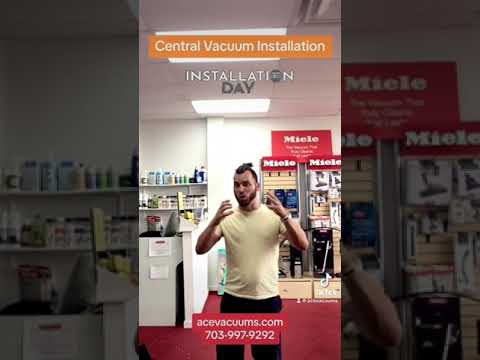
This is useful when you want one broader “we do this all day” proof card without falling back into stock product imagery.
Open Full VideoBuilt-in vacuum systems are complex, but fixing them shouldn't be. Our specialists find exactly where your system is failing so you only pay for the repairs you actually need. We rely on expert troubleshooting—not guesswork—to restore your system's deep-cleaning power.
Each central vacuum brand has its own weak spots—from hidden clogs and low suction to motor, inlet, and hose issues. This section shows the problems AceVacuums technicians diagnose and fix every day.
Common first checks: hose-switch behavior, powerhead feed, older inlet seals, and intermittent suction that feels room-specific instead of whole-house.
The AceVacuums fix: separate hose and tool-side electrical issues from tubing-side airflow loss first, then match Beam-compatible hoses, inlets, attachments, or system upgrades.
Best photo to text: inlet faceplate, hose handle, and the unit label.
Common first checks: relay and control behavior on older units, inlet activation inconsistency, and aging hose or accessory fitment.
The AceVacuums fix: confirm whether the issue is truly power-unit electrical or simply a hose or inlet signal problem, then route to correct repair, replacement board, or matched accessory path.
Best photo to text: model label inside or near the power unit plus the inlet plate.
Common first checks: older high-use power units, long pipe-run performance questions, and upgrade decisions where a better hose or attachment setup may solve more than the power unit alone.
The AceVacuums fix: use MD-specific dealer guidance, system sizing logic, and upgrade matching instead of treating every MD issue like a simple motor swap.
Best photo to text: power unit label, utility valve area, current hose end, and any existing tool kit.
Common first checks: changes in sound signature, reduced performance under load, filter-condition neglect, and replacement decisions for premium systems in larger homes.
The AceVacuums fix: keep the conversation premium — quiet-operation expectations, large-home performance, and whether service, repair, or a newer MD path is the smarter long-term move.
Best photo to text: full front of unit, label plate, and canister or filtration area.
Common first checks: intermittent starts, reduced suction from clog or filter condition, and aging power units where accessory compatibility questions get mixed in with repair questions.
The AceVacuums fix: identify whether the problem is a true power-unit failure or a tool or airflow path issue, then route to repair, parts matching, or upgrade planning.
Best photo to text: unit label, utility inlet, and the hose end that plugs into the wall.
Common first checks: canister sealing, older cyclonic-unit performance, motor wear, and whether the issue is the unit itself or the accessory chain used with it.
The AceVacuums fix: separate core unit performance from hose and powerhead problems, then route to repair, maintenance, or a matched VacuMaid replacement path.
Best photo to text: full unit, motor side, label plate, and current hose setup.
Common first checks: older legacy systems, aging seals, hose and handle contact issues, and customer uncertainty around what parts family they actually own.
The AceVacuums fix: use photos to identify the system family first, then decide whether the smarter route is repair, parts, accessory matching, or a full central vac upgrade.
Best photo to text: unit label, inlet faceplate, and the current hose cuff or handle.
Common first checks: larger-home airflow questions, accessory compatibility, and whether the system is underperforming because of setup, age, or a specific component failure.
The AceVacuums fix: route long-run suction questions into system-level diagnosis first, then match Cana-Vac-compatible replacement units, tools, or service.
Best photo to text: entire unit, inlet style, hose end, and any current floor tool.
From pre-planned systems in new builds to clean retrofits in finished homes, AceVacuums installs central vacuum systems for strong suction, quiet performance, and a cleaner, more convenient whole-home experience.
Rough-in planning, inlet spacing, builder coordination, unit sizing, garage utility ports, and quiet performance from day one.
Finished-home installs using closets, soffits, basements, garage walls, and route planning to reduce disruption.
Hide-A-Hose, garage kits, condo and row-house planning, and replacement-unit recommendations where the old system is no longer worth saving.
Our Bronze, Silver, and Gold options make service easy to understand. Each plan is designed to help protect suction, airflow, and long-term reliability, so you can choose the level of maintenance that fits your home and system.
These are planning frameworks for the page, not rigid promises. Final scope and pricing should be confirmed after technician review.
After the issue is identified, we help direct you to the right part, accessory, repair option, or replacement system so you can move forward with confidence.
Best for whole-tool replacement, universal kits, floor tools, and customer-friendly “I need the right setup” shopping.
Shop KitsBest for routine maintenance, suction loss caused by restriction, and cleaner air and cleaner motor pathways.
Shop Bags & FiltersBest when repair no longer makes sense or the old power unit is no longer the right fit for the home.
Shop New UnitsUse for MD-specific system comparison, premium upgrade planning, and dealer-path support.
Shop MDUse for Beam unit upgrades, compatible system shopping, and stronger brand-specific pathways.
Shop BeamBest for Nutone unit comparison and brand-family replacement support.
Shop NutoneUse for VacuMaid replacement units and broader central-vac upgrade guidance.
Shop VacuMaidUseful when larger homes need a stronger unit-match conversation or long-run suction planning.
Shop Cana-VacFrom Northern Virginia to Maryland and Washington, DC, AceVacuums provides expert central vacuum repair, maintenance, and installation for homes throughout the region. Explore the service areas we cover and get help closer to home.
Northern Virginia customers often need an exact split between tool-side problems and true in-home service. This block supports the corridor-specific routing without repeating the tighter city pages.
Montgomery County should emphasize retrofit planning, premium-home installation logic, quiet-home value, and the best route through Fairfax when an in-person anchor is needed.
DC copy should sound less suburban and more technical: route planning, access constraints, parking windows, finished-space protection, and quieter ownership benefits.
This section simplifies the next step by helping customers choose between store intake and scheduled in-home service in one clear place.
For 25+ years, Ace Vacuums has filled the gap left by big-box retailers. We provide the expert repairs, warranty support, and genuine OEM parts that Amazon and Walmart simply don't offer. From free estimates to same-day service, we are your local alternative for professional home care solutions.
Conveniently serving Washington D.C. and Maryland (Montgomery & Prince George's Counties). Our showrooms are just 20 minutes from DC and 10 minutes from Tysons Corner.
Hablamos Español — Service in English & Spanish.
Serving Zip Codes: 20147, 20176, 22030, 22031, 20151, 20190, 22102, 22314, 20110, 20148 & surrounding areas. All repairs performed by certified technicians using genuine parts.